Open Seams and Laps
Seams on older single-ply roofs pull apart as tape, adhesive, or welds age. Water then runs under the membrane and soaks the insulation, so a stain inside often appears well away from the opening above.

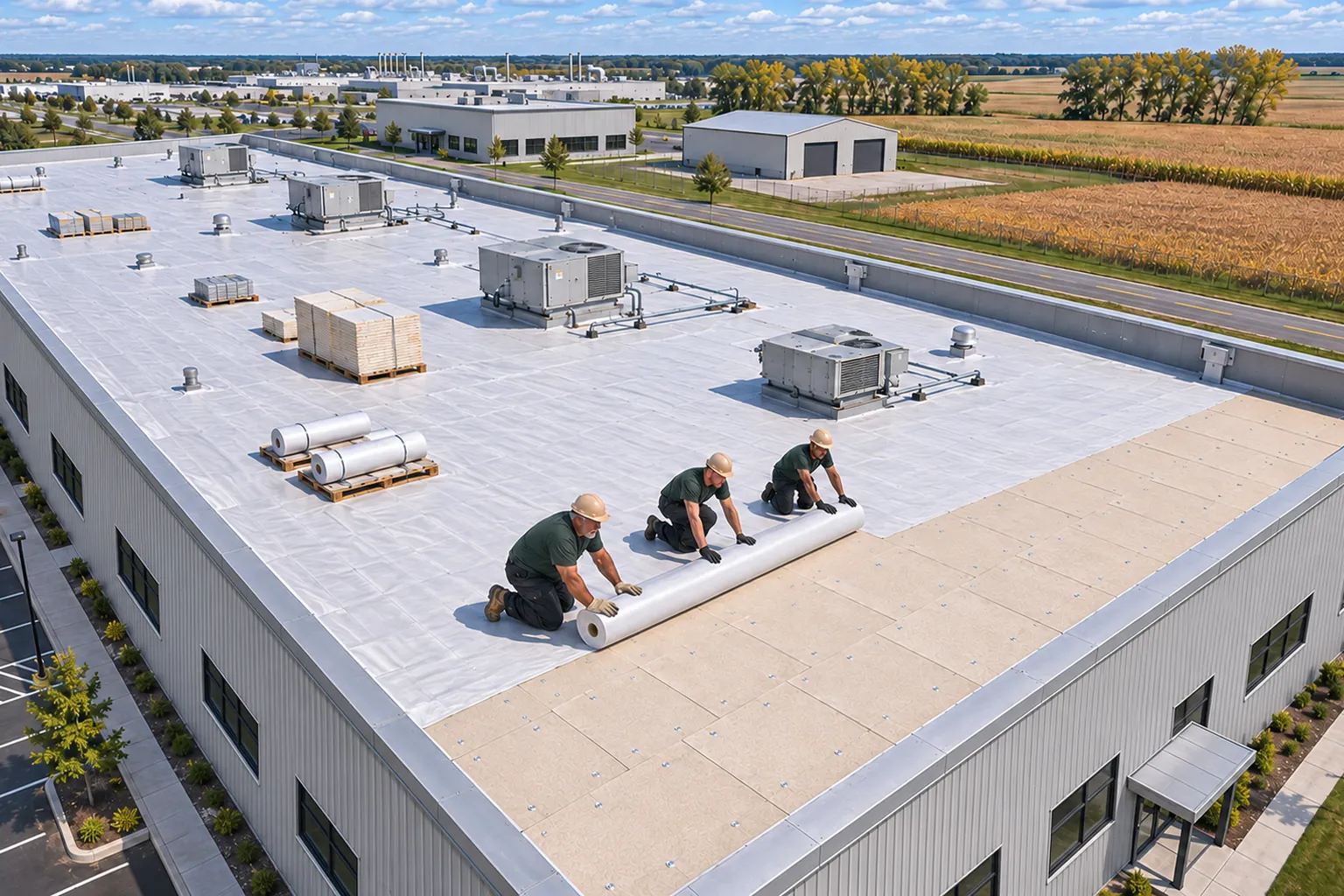
As a Kokomo commercial roofing contractor, we install and replace TPO, EPDM, industrial, and metal roofs on plants, warehouses, offices, and shops in Kokomo and five nearby towns.
These conditions usually start a Kokomo commercial roofing conversation. Each one shows up on a roof walk or from inside the building, and each points toward a repair, a recover, or a replacement.
Seams on older single-ply roofs pull apart as tape, adhesive, or welds age. Water then runs under the membrane and soaks the insulation, so a stain inside often appears well away from the opening above.
Ponding at clogged drains and sagging deck areas keeps seams and flashings wet for days. Standing water wears the membrane faster, adds weight to the roof, and in winter freezes against laps that would otherwise shed it.
Soft spots underfoot and dark core samples point to insulation that has taken on water. Wet board loses its insulating value, holds moisture against the deck, and usually marks the line between a repair and a replacement.
Rooftop units, exhaust fans, and pipe supports are where most plant roofs start leaking. Flashing shrinks, pulls away from curbs, or cracks at the corners, and service traffic wears thin spots into the membrane around them.
On steel buildings, rust at laps and eaves, backed-out fasteners, and worn washers let water in along the panel ribs. Panels that flex in the wind loosen more fasteners each season until the roof needs new metal.
Winter freezes drains and scuppers on flat roofs, so meltwater backs up against curbs and parapet walls. Any weak lap along those low points leaks during a thaw, even on a roof that handles a normal rain.
A roof walk and core samples decide which job fits. The table shows where a targeted repair, a recover over the old roof, or a full tear-off and replacement usually lands.
| What You See | Targeted Repair | Recover Over It | Tear-Off And Replace | What Decides It |
|---|---|---|---|---|
| A few open seams on an otherwise dry roof | Usually fits | Sometimes | Rarely | Cores come back dry and the membrane still flexes. |
| Wet insulation in one bay or section | Sometimes | Rarely | Sometimes | Wet board comes out before anything new goes on. |
| Wet insulation across most of the roof | Rarely | Rarely | Usually fits | Large wet areas leave tear-off as the dry path. |
| Two roofs already stacked on the deck | Sometimes | Rarely | Usually fits | Building code limits on roof layers come into play. |
| Worn membrane over one dry layer | Rarely | Usually fits | Sometimes | A cover board and new membrane can go over it. |
| Rusted metal panels on solid purlins | Sometimes | Usually fits | Usually fits | New panels or a framed retrofit go over the steel. |
Four roof systems cover most commercial buildings around Kokomo. Each card explains the fit, and the matrix below matches the systems to the buildings we work on most.
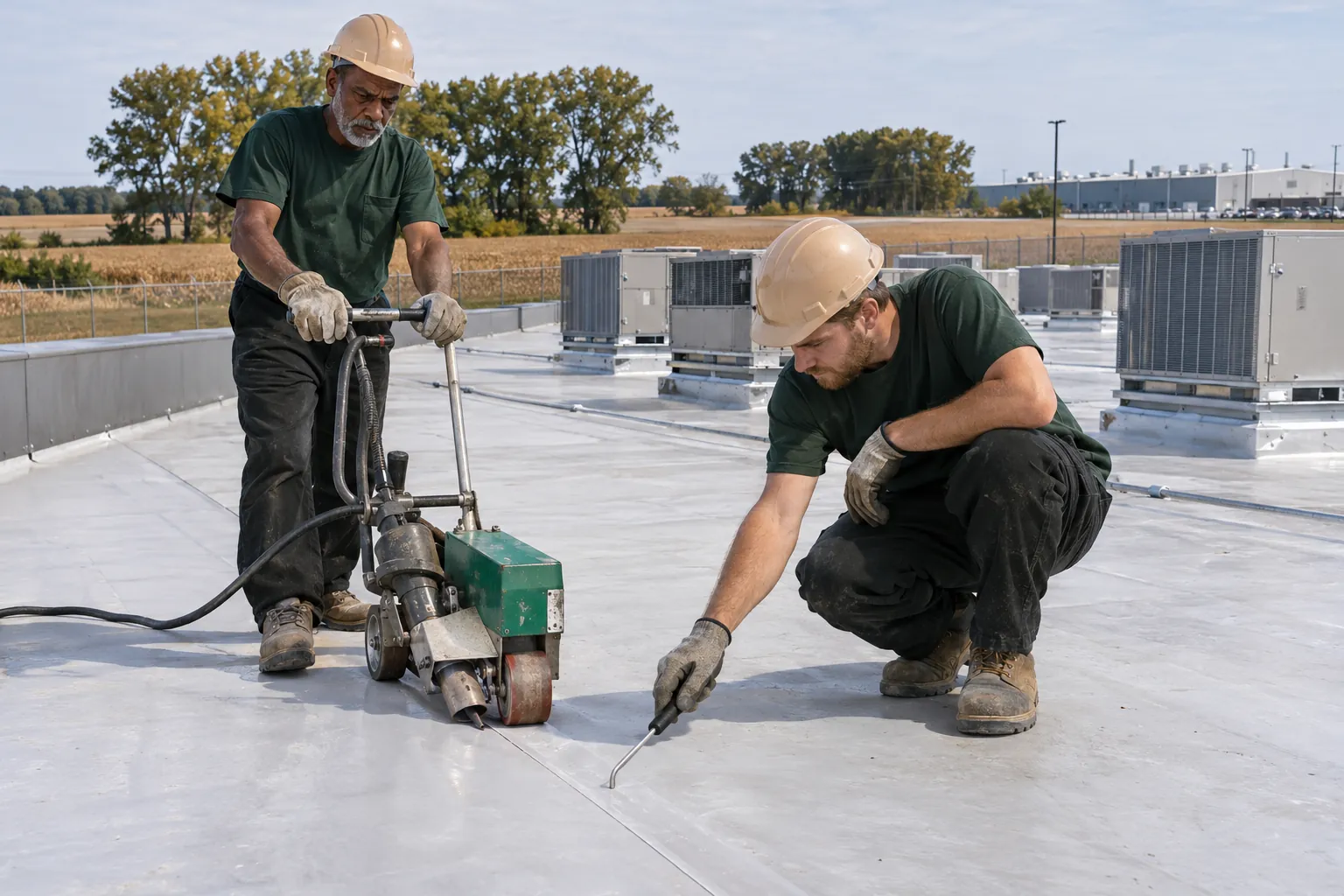
White, heat-welded membrane for large low-slope roofs on warehouses, retail centers, and offices that want a reflective surface and seams welded into one sheet.
Kokomo TPO Roofing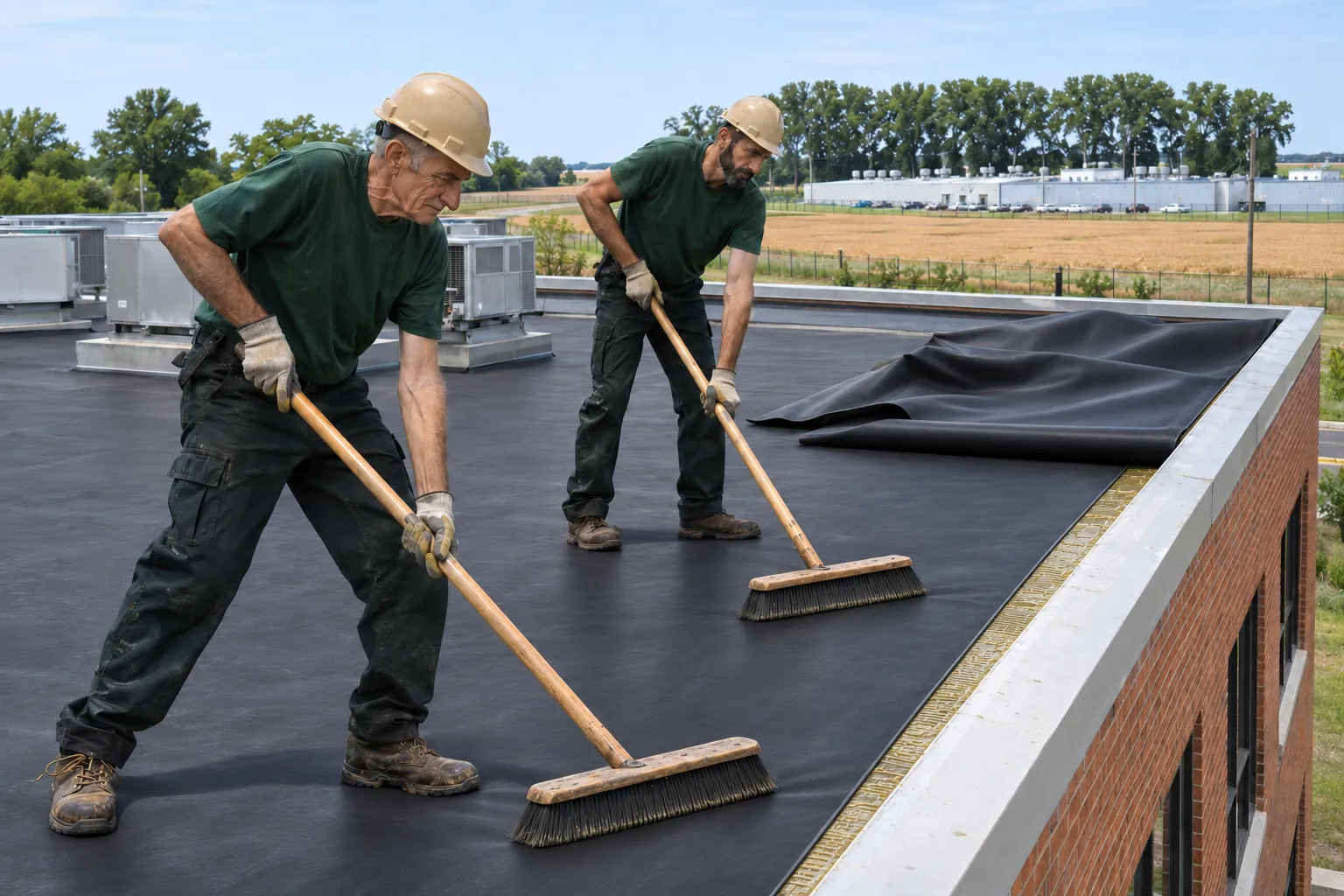
Black rubber membrane that stays flexible through cold winters, glued, fastened, or ballasted over insulation on flat roofs with simple layouts and long open runs.
Kokomo EPDM Roofing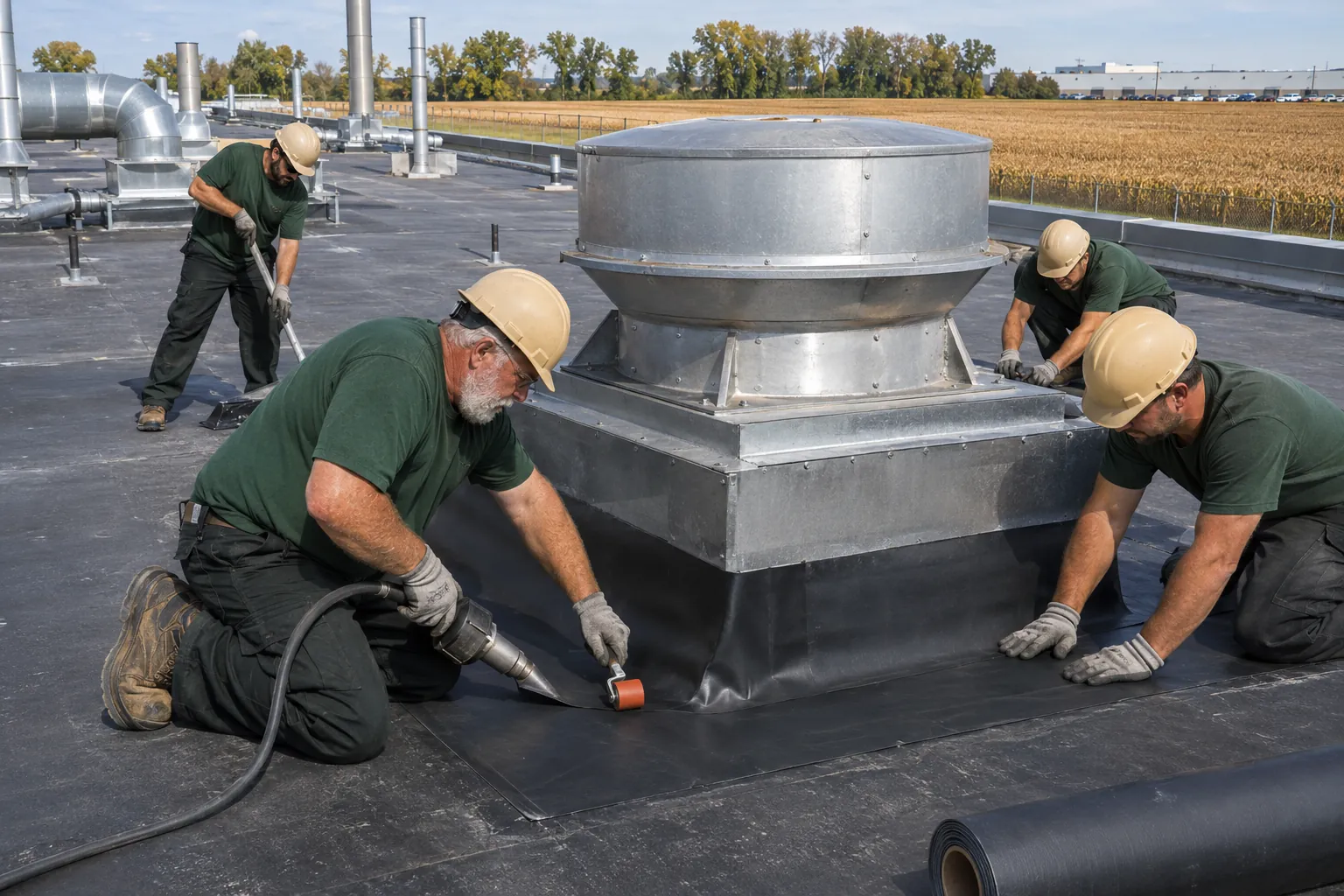
Roof installation and replacement for plants and mills, planned around rooftop equipment, process exhaust, heat, and production schedules on the floor below.
Kokomo Industrial Roofing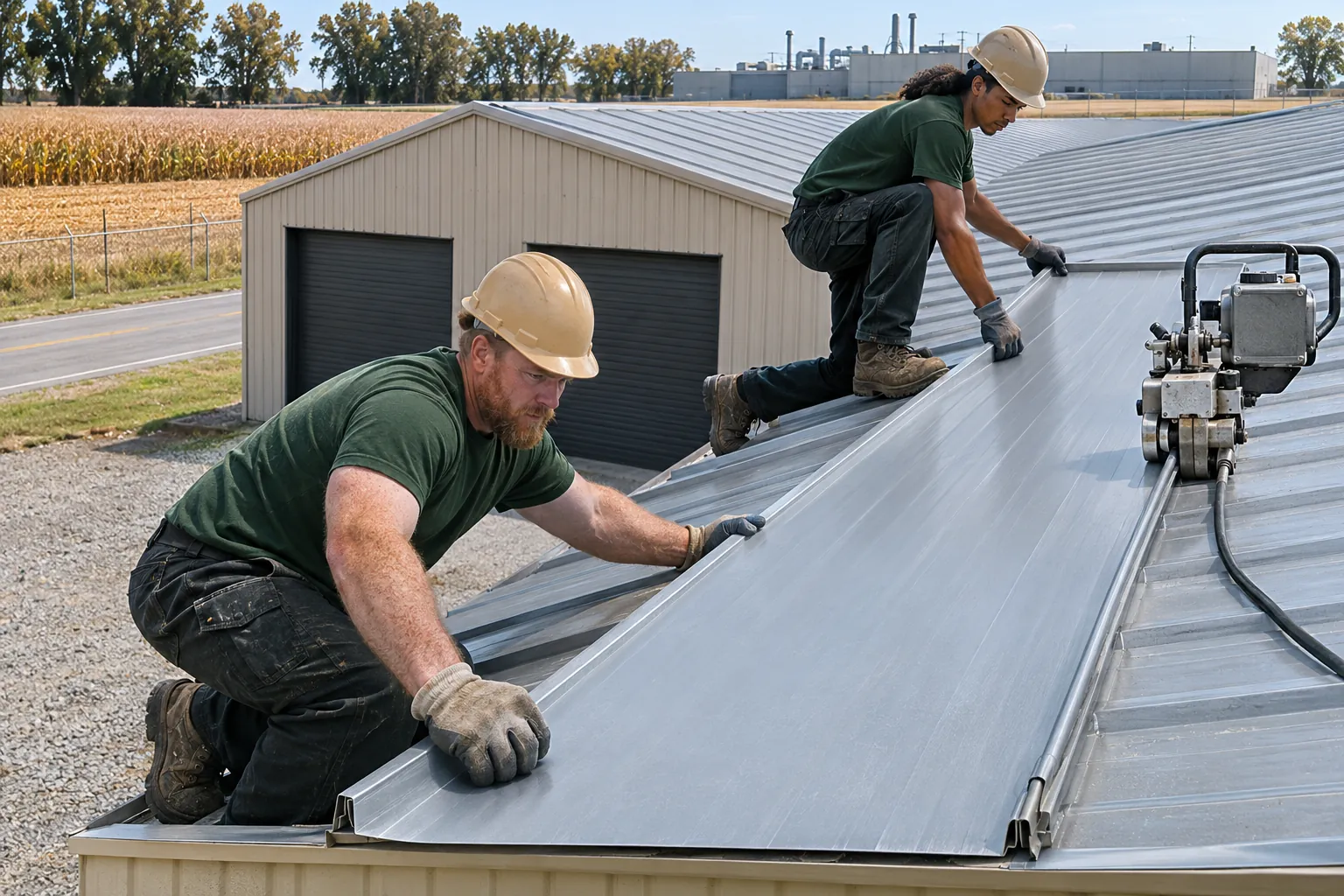
Standing seam and exposed-fastener panels for steel buildings, shops, and agricultural structures, installed new, as a framed retrofit, or over a dry existing roof.
Kokomo Commercial Metal RoofingWhich System Fits Which Kokomo Building
| Building Type | TPO Roofing | EPDM Roofing | Industrial Roofing | Commercial Metal Roofing |
|---|---|---|---|---|
| Auto and parts plants | Wide roofs with many curbs | Rarely | Phased around running lines | Rarely |
| Steel and wire mills | Rarely | Rarely | Details rated for heat and residue | Heavy-gauge panels on steel frames |
| Distribution warehouses | Long runs with fewer seams | Simple layouts, flexible in cold | Rarely | Rarely |
| Offices and retail buildings | Reflective white surface | Flat roofs with few penetrations | Rarely | Rarely |
| Farm and equipment buildings | Rarely | Rarely | Rarely | Wide spans that shed snow |
Water coming through the deck today? Call us and we will talk through where it shows inside and what needs to happen first on the roof.
Call UsPlanning a replacement or a new building? Book a free inspection, and we will measure the roof, take cores, and price the system that fits.
Schedule Your Free InspectionEvery replacement follows the same four stages, from the first roof walk to the final flashing check. Pick a stage to see what happens on the roof and around the building.
We walk the whole roof, take core samples at low spots and stained areas, and read every drain, curb, and edge. You get photos of what we found and a written scope for the system that fits.
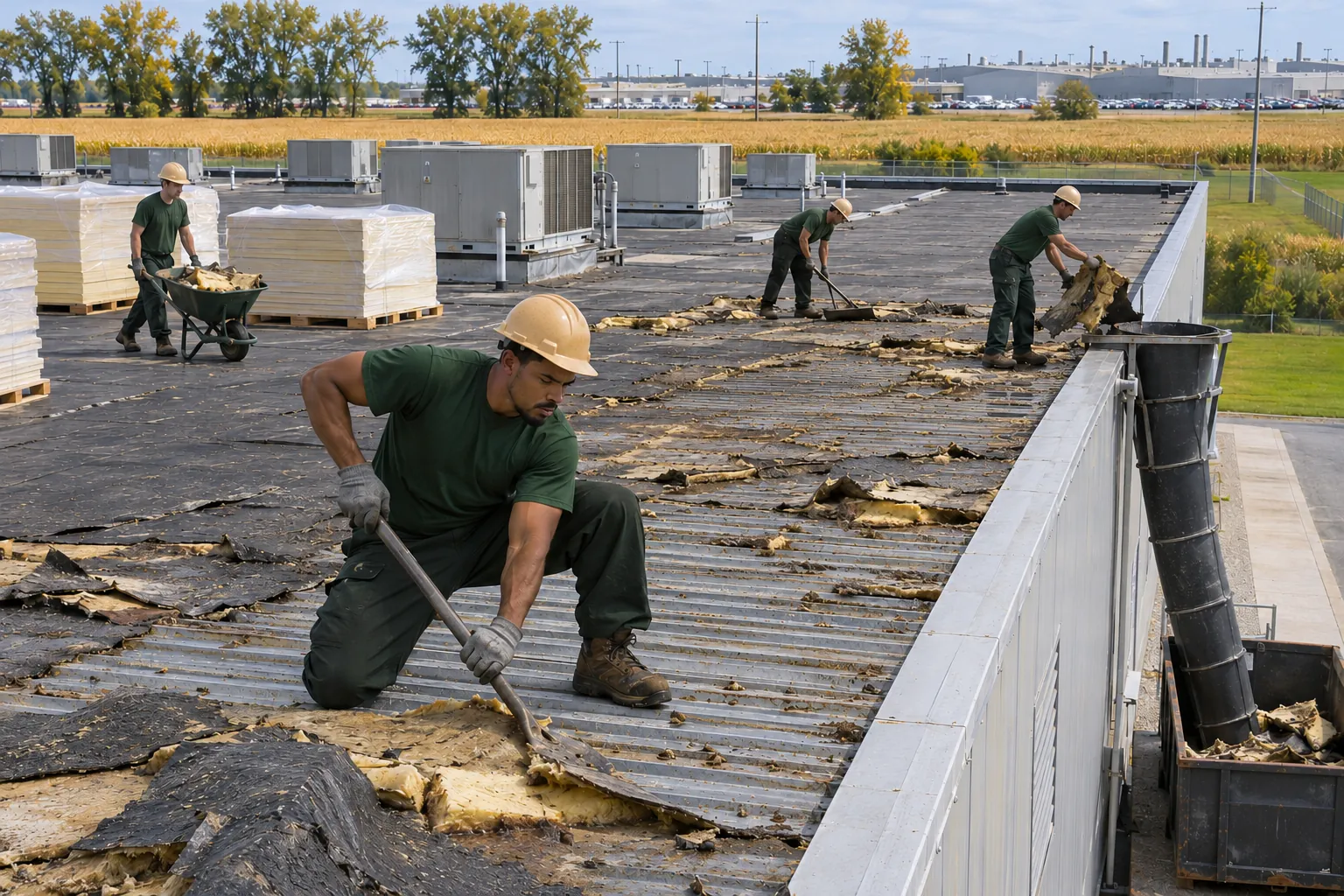
Large roofs are split into sections sized to what a crew can tear off and close in one day. Crane times, staging areas, and quiet zones are set with your facility team before the first sheet comes off.
Each section goes down to the deck, damaged deck is repaired, and new insulation, cover board, and membrane or panels go on. Every open section is watertight before the crew leaves for the evening.
Flashings at curbs, drains, and edges are finished and probed, walkway pads go along service paths, and the debris is hauled away. A last roof walk with you covers the finished details and care steps.
Roof layout, slope, and what happens inside the building narrow the choice quickly. These are the patterns we see when matching a system to a roof here.
| Your Roof | TPO | EPDM | Metal | Why |
|---|---|---|---|---|
| Large low-slope roof under summer sun | Usually fits | Sometimes | Rarely | White TPO reflects heat off wide open fields. |
| Flat roof with a simple layout and few openings | Usually fits | Usually fits | Rarely | Both membranes cover long runs with few seams. |
| Roof crowded with curbs, fans, and pipe supports | Usually fits | Sometimes | Rarely | Welded flashings hold up around equipment. |
| Sloped steel building or farm structure | Rarely | Rarely | Usually fits | Panels span the purlins and shed snow. |
| Roof exposed to oils or process residue | Sometimes | Rarely | Sometimes | What lands on the roof sets the membrane. |
| Flat roof that needs added slope to drain | Sometimes | Sometimes | Usually fits | A framed metal retrofit builds in pitch. |
We install and replace commercial roofs in Kokomo and in Marion, Logansport, Peru, Wabash, and Rochester.
Outside these towns? Call us or send us a message.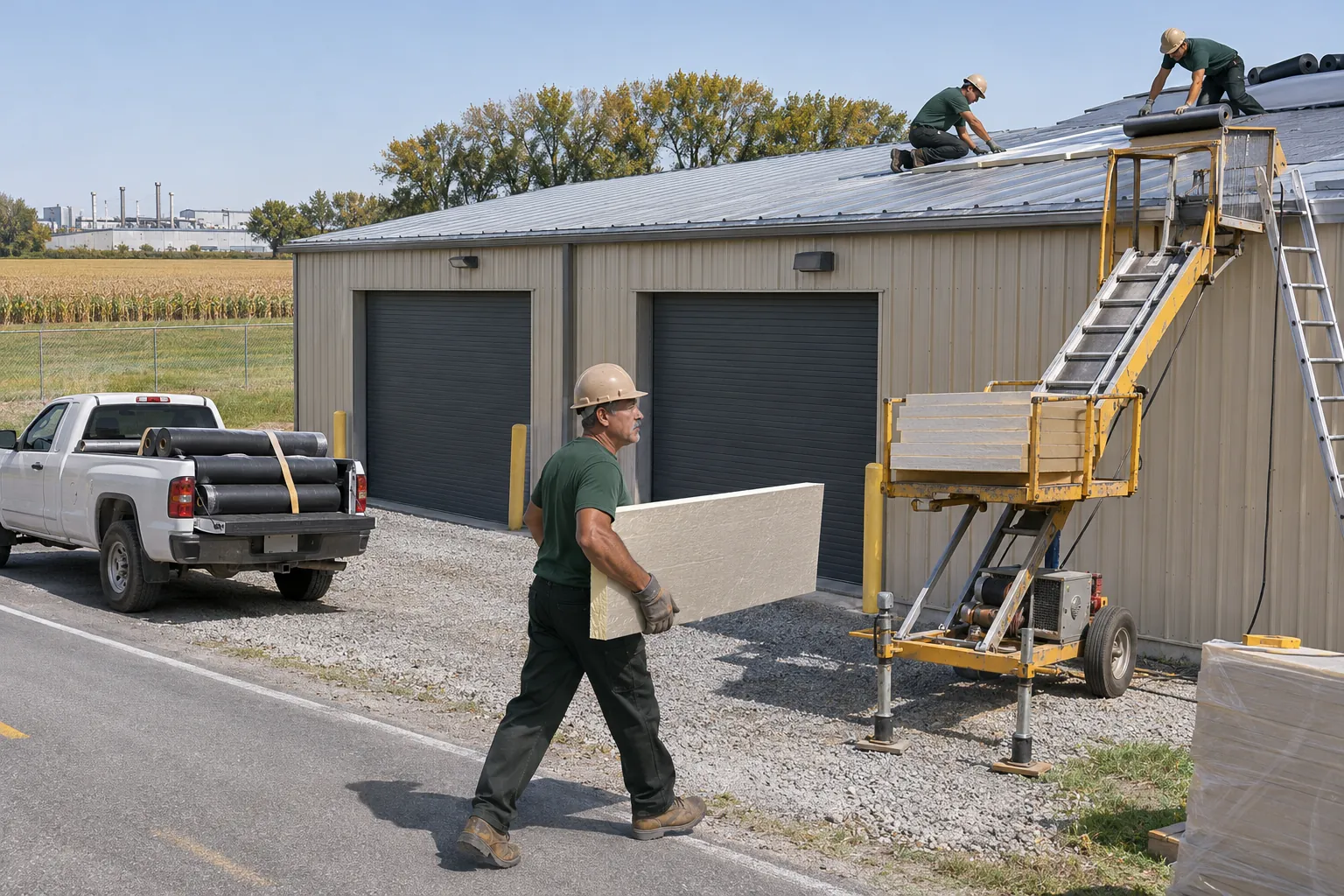
Phased TPO and industrial roof replacements on plant buildings that keep running while each section is torn off and closed.
EPDM and TPO replacements on occupied commercial buildings, split into sections so tenants and stock stay dry.
Standing seam and exposed-fastener metal roofs on light industrial and commercial buildings, matched to the slope of each roof.
Tear-offs of older built-up roofs, with parapet walls, internal gutters, and patched decks repaired before new single-ply goes on.
Industrial roofing on plants with heavy rooftop equipment, exhaust fans, and process penetrations, plus walkway pads on service paths.
Roof size sets the base, and the rest comes from what the roof walk finds: how many old layers come off, how much insulation is wet, the system and membrane thickness chosen, insulation thickness, and the number of curbs, drains, and penetrations to flash.
Crane access and phasing around operations add to it. A free on-site estimate prices your roof from those measurements.
Single-ply TPO and EPDM roofs often run 20 to 30 years and metal roofs longer, yet the figure for any one building comes from its details.
Clean welds and flashings, drains that stay open, limited foot traffic near equipment, and quick fixes after freeze-thaw seasons, hail, and summer heat all stretch its service life.
Both work well on flat roofs here. TPO is a white sheet with heat-welded seams, a good match for buildings that want a reflective surface and welded laps. EPDM is black rubber that stays flexible in the cold and has decades of use on flat roofs.
Layout, rooftop traffic, chemicals on the roof, and budget settle it.
Ask each company to walk the roof and put the scope in writing. Compare the named system, membrane thickness, insulation and cover board, flashing and edge details, how debris and building operations are handled, and who pulls permits. Request proof of insurance and photos of the problem spots.
One-line bids leave too much unstated to compare fairly.
The City of Kokomo commercial permit guide puts roofing on its list of projects that skip a city building permit, while noting that some commercial work needs releases from the Indiana Department of Homeland Security.
Deck repairs, structural changes, or moved rooftop units can change the answer, so we check with the city permits department before each replacement.
In most cases, yes. The re-roof runs in sections so only a small area is open at once, and each section is closed watertight before the crew leaves. Work near air intakes, rooftop units, and process exhaust is scheduled with your facility team, with protection set over sensitive lines below.
Tell us about the building and the roof, and we will set up a free inspection with core samples and a written scope.